
Drones in Agriculture: Benefits and Regulations to Know Before You Fly
By Justin Tanner, Ph.D., University of California Cooperative Extension Farm Advisor, San Joaquin County
Drones are rapidly becoming a valuable tool on farms of all sizes. These unmanned aerial vehicles can scout fields in a fraction of the time it takes on foot, giving growers a bird’s-eye view of their crops. Equipped with cameras and sensors, drones can quickly help you identify underperforming areas of your field. Such underperformance can then be evaluated on the ground to identify pests, nutrient deficiencies, or irrigation problems. What once required days of field walking can now be accomplished in minutes, and specialized cameras can detect subtle changes in plant health even before symptoms are visible. From vineyards to orchards to row crops, drones help growers monitor conditions more efficiently and respond to issues faster.
High-resolution drone imagery allows early detection of field problems. Even a standard RGB camera can identify weed patches, water pooling, or irrigation leaks, details that help pinpoint where action is needed (Figure 1). Drones help farmers take targeted steps before minor issues spread, saving time, labor, and inputs by focusing efforts only where they’re needed. Many growers find that early detection improves yield, crop quality, and overall management decisions.
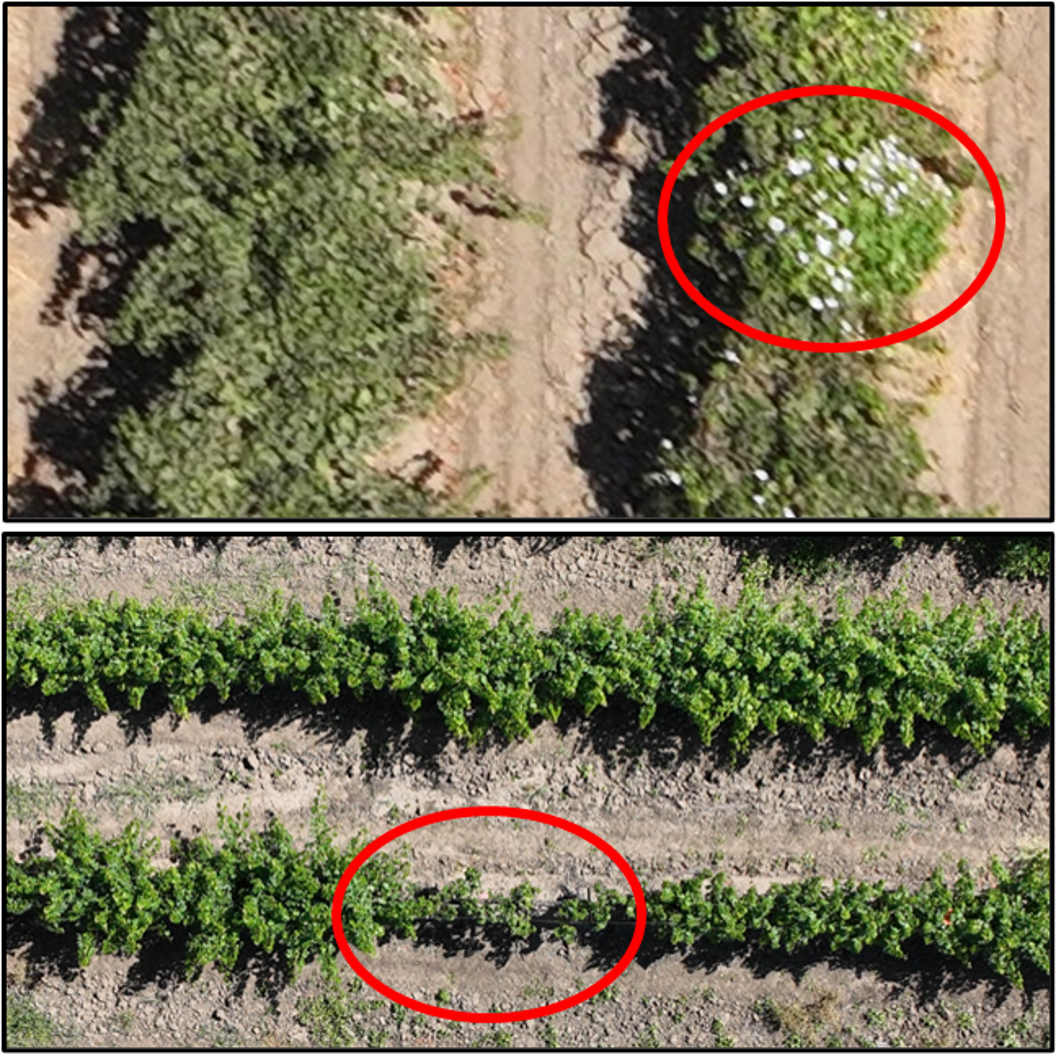
Figure 1. Bindweed growing over a grapevine canopy (top). Shoot stunting caused by grapevine trunk disease (bottom).
Know the Rules
Before launching a drone, it’s essential to understand the rules governing its operation. The Federal Aviation Administration (FAA) considers any drone use that isn’t purely recreational to be a commercial operation, and that includes all agricultural uses. If you’re flying a drone for any beneficial purpose, such as scouting, irrigation checks, or mapping, it is a commercial activity. Under FAA regulations, all such flights are governed by Part 107, which regulates small Unmanned Aircraft Systems (sUAS). Even if no money changes hands, using a drone “in furtherance of a business” (for example, managing your own farm or assisting a neighbor) requires compliance with Part 107 and a valid Remote Pilot Certificate. And remember—while it might be tempting to 'fly under the radar,' the FAA doesn’t have much sense of humor about unlicensed operations. Non‑compliance can result in significant fines and penalties, so it’s best to stay in compliance and aboveboard on every flight.
To become certified, operators must pass the Unmanned Aircraft General – Small (UAG) exam at an FAA-approved testing center. The test costs $175, covers aeronautical knowledge such as airspace, weather, and safety and is open to applicants at least 16 years old. After passing, pilots complete an online application and background check to receive their certificate. Maintaining certification requires a free online refresher course every 24 months, rather than retaking the full exam.
Each drone used must also be registered with the FAA, regardless of weight. Registration costs $5 per drone for three years and can be completed online through the FAA Drone Zone website(https://faadronezone-access.faa.gov/#/). Once registered, you’ll receive a unique number that must be visibly marked on the aircraft.
All registered drones must also comply with the FAA’s Remote ID rule, which functions like a digital license plate broadcasting a drone’s identity and location while in flight. Most new drones include Remote ID capability, while older models may require an add-on broadcast module. Remote ID is mandatory for nearly all drones flown under Part 107, except when operating exclusively in FAA-Recognized Identification Areas (FRIAs) designated zones for hobby and educational flying. Because agricultural operations occur outside these zones, compliance is required.
Part 107 also limits flight altitude to 400 feet above ground level, requires the operator to maintain visual line-of-sight, and allows night operations only if the drone is equipped with anti-collision lighting visible for at least three statute miles. It also restricts flying over people. These rules are designed to maintain safety in shared airspace and protect both pilots and bystanders. Operating commercially without a Part 107 license or an unregistered drone can result in fines and enforcement actions.
Fortunately, the licensing process is straightforward, and once certified, growers gain access to an invaluable management tool. Drones can provide insights that improve efficiency, reduce costs, and support data-driven decisions that enhance both productivity and sustainability.
If you’re interested in incorporating drones into your farm operations, you don’t have to navigate the process alone. Justin is available as a local resource for San Joaquin County growers, consultants, and pest control advisors who have questions about drone technology, the Part 107 certification process, or FAA compliance. Whether you’re selecting your first drone, preparing for the exam, or planning safe flight operations, feel free to reach out. Justin’s email is jdtanner@ucanr.edu. With the right knowledge and guidance, drones can become a cornerstone of your precision agriculture toolkit—helping you farm smarter, save time, and stay compliant with FAA rules.